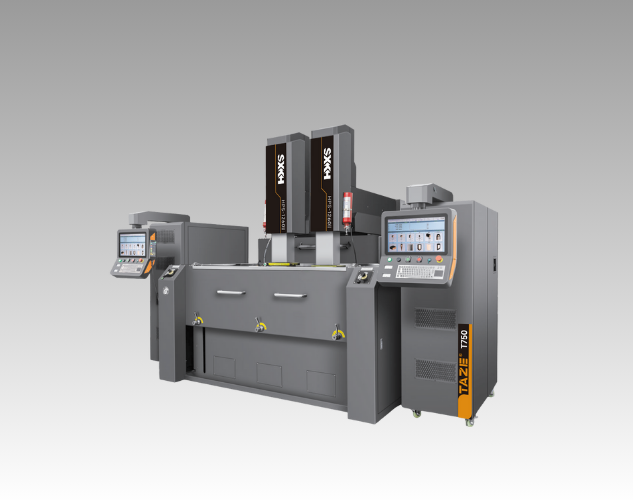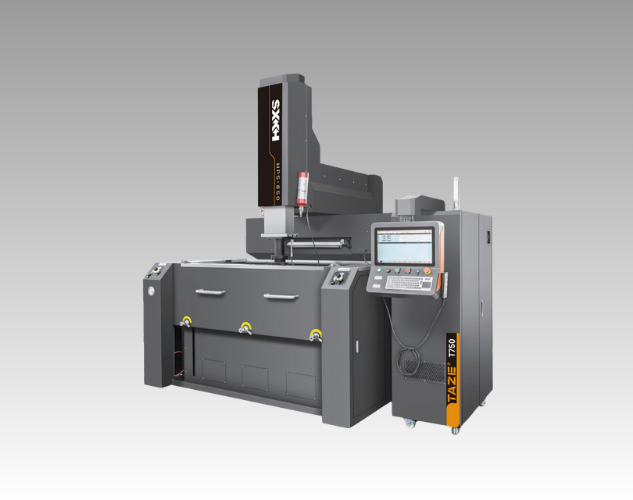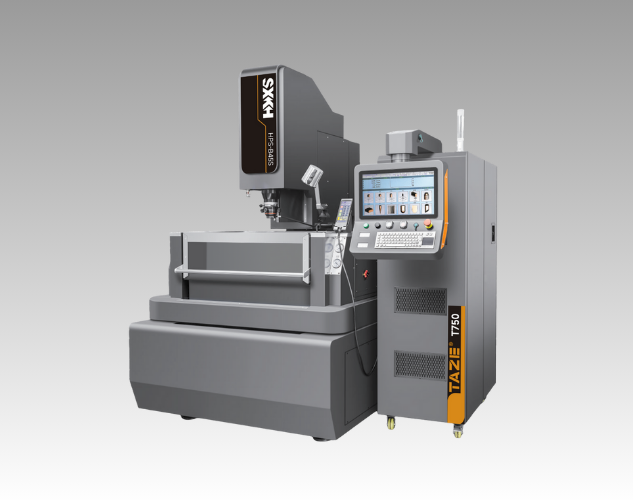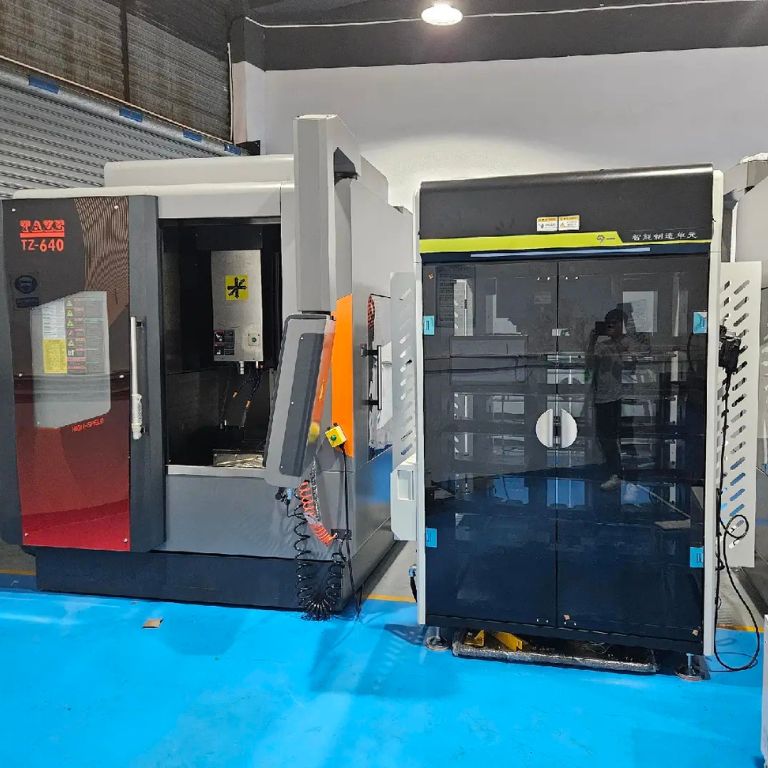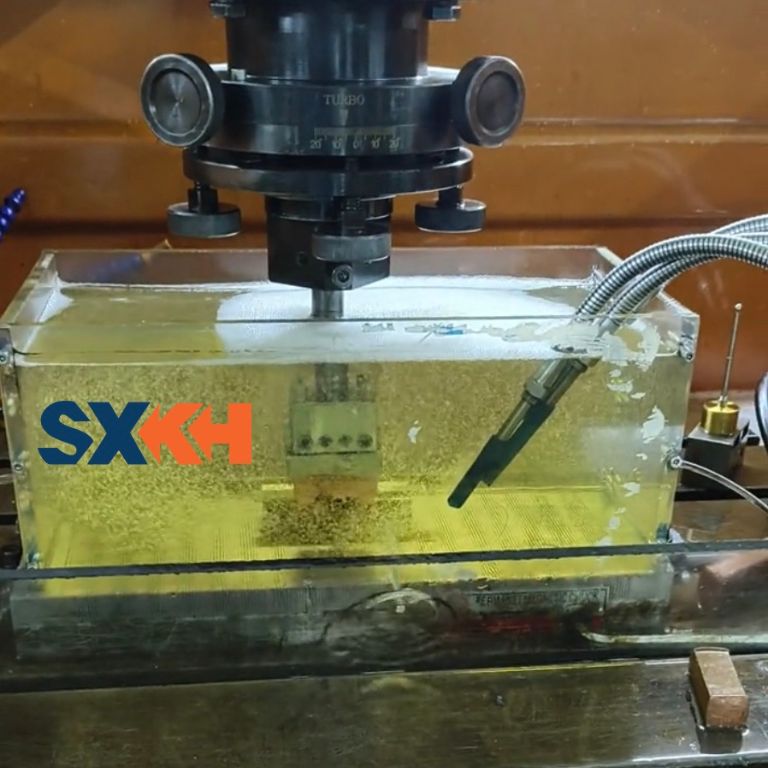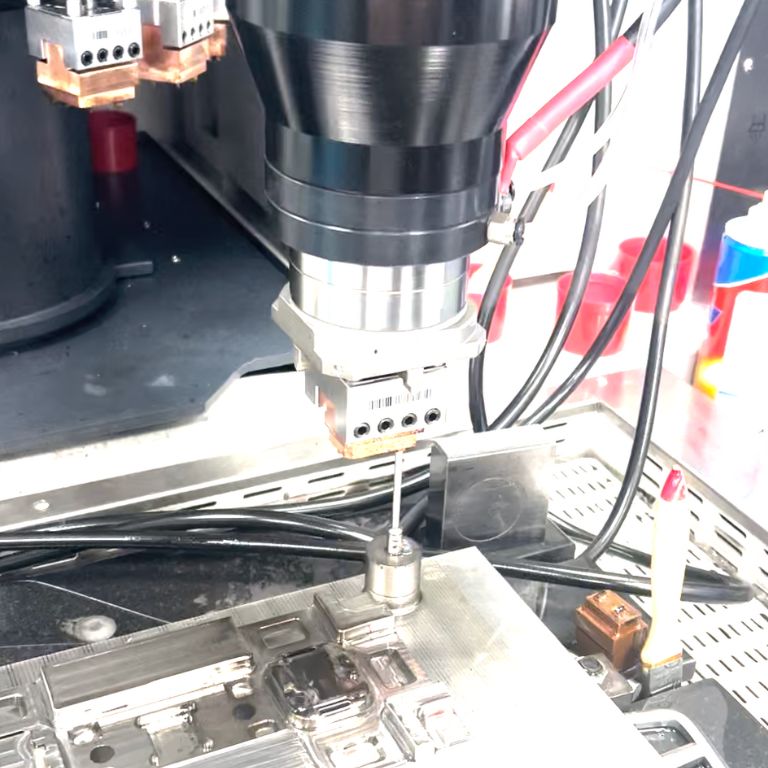
Sinker EDM Machine

  • Remote Assistance Function: One-touch calling for instant support
  • Easy Operation: Just input four basic parameters to start machining
  • Industrial Linux OS: Stable, secure & free from copyright restrictions
  • Power-Off Memory Protection: Resume machining without data loss
  • High Gloss Mirror Circuit: Achieve an ultra-smooth 0.01 Ra surface finish
  • Max Machining Speed: 750 mm³/min: Faster production, higher efficiency
  • Large 64GB Memory & 19" Capacitive Display: Enhanced storage & control
  • Supports 5-Axis Linkage & Multi-Machine Networking: for seamlesss automation
  • ERP Management & ATC Robot Support: Smart integration for streamlined operations

Say No To

  • Rough or uneven surface finishes
  • Dimensional inaccuracies in finished components
  • Excessive machining time and inefficiency

Key Technical Features

  • High Gloss Mirror Circuit (0.01 Ra Surface Finish): A dedicated finishing circuit that achieves a mirror-grade surface (Ra, or roughness average, measured in micrometres — 0.01 Ra is near-optical smoothness) directly during spark erosion, reducing or eliminating manual polishing on cosmetic and sealing surfaces.
  • Max Machining Speed of 750 mm³/min: Material removal rate — the volume of workpiece material eroded per minute — directly determines how fast a cavity or core can be roughed out before finishing passes begin.
  • 5-Axis Linkage with Multi-Machine Networking: Enables simultaneous multi-directional electrode movement for complex 3D cavity geometries, with networking support to monitor and queue jobs across several machines from one interface.
  • Power-Off Memory Protection: Retains exact machining state through a power interruption and resumes from that point rather than restarting, protecting long unattended finishing cycles from costly rework.
  • Industrial Linux OS with Remote Assistance: A stable, licensing-restriction-free operating environment paired with one-touch remote support calling for fast technical diagnosis.
  • ERP Management and ATC Robot Support: Native integration with automatic tool changer robotics and production ERP systems for lights-out or semi-automated manufacturing cells.

Industrial Applications

  • Die & Mould Manufacturing: High-cavity injection moulds and progressive stamping dies requiring deep, geometrically complex cavities with mirror-finish cores.
  • High-Pressure Die Casting (HPDC) Tooling: Dies subject to thermal cycling and erosion, where surface finish quality directly affects casting release and part quality.
  • Automotive Component Tooling: Stamping dies and injection mould tooling for interior trim, connectors, and precision housings.
  • Aerospace Component Machining: Precision cavities and fixtures requiring tight tolerances and superior surface integrity on hardened tool steels.
  • Electronics & Connector Tooling: Fine-detail mould cavities for connectors, switchgear, and small precision components.
  • Medical Device Tooling: Cavities requiring both tight tolerance and a clean, low-roughness surface finish.

Technical Specifications

Table Size (X x Y)650 x 450 mm
X/Y/Z Axis Travel400 / 300 / 300 mm
Max Workpiece Weight800 kg
Max Electrode Weight50 kg
Max Machining Speed750 mm³/min
Best Achievable Surface FinishRa 0.01 μm (mirror finish)
ControllerIndustrial Linux OS, 19" capacitive touchscreen
Memory Capacity64 GB
Axis Configuration5-axis linkage, C-axis EDM automation
Automation SupportATC robot integration, multi-machine networking, ERP connectivity
Dielectric Fluid Capacity800 litres
Power Supply3-phase, 415V, 50Hz
Power-Off ProtectionYes — resumes machining state without data loss

Specifications vary by model configuration. Confirm exact parameters for your production requirement with Plassteze's engineering team.

C-Axis

EDM Automation

Double Head

Technical FAQ

Q: What surface finish can we expect straight off the machine, without manual polishing?
With the High Gloss Mirror Circuit engaged, the machine achieves up to Ra 0.01 μm directly during the finishing pass, significantly reducing or eliminating the manual polishing step for most cosmetic and sealing-critical cavities.

Q: How does power-off memory protection affect long unattended machining cycles?
If mains power is interrupted mid-program, the machine retains its exact machining position and parameters, resuming from that point once power is restored — protecting overnight and weekend unattended cycles from restarting and risking damage to the electrode-workpiece gap accuracy.

Q: What's the expected maintenance routine, and how does dielectric fluid condition affect performance?
Routine maintenance centres on dielectric fluid filtration and periodic replacement, electrode wear inspection, and servo axis calibration checks. Degraded dielectric fluid is one of the most common causes of inconsistent spark gap and surface finish quality.

Q: How long does a Sinker EDM machine typically remain productive in continuous toolroom use?
With proper dielectric fluid management, regular servo and guideway maintenance, and controlled ambient operating conditions, these machines are typically built for a service life well beyond a decade in continuous industrial use.

Need Any Help?

Need Any Help, Call Us 24/7 For Support