- B-152, Mayapuri Industrial Area
- Email us: plassteze@plassteze.com
- Home
- About Us
- Products
- Blog
- Contact

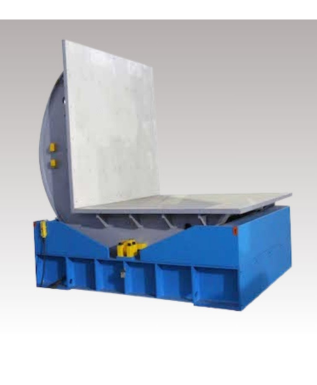
Plassteze supplies hydraulic mould flippers and die flippers for safe, controlled rotation of heavy moulds and dies during maintenance, inspection and repair operations in tool rooms across India. Our mould flippers allow 90° or 180° rotation of moulds, enabling technicians to work on all faces safely without the need for cranes or manual handling. Available in a range of load capacities to suit small, medium and large moulds.
A mould flipper (also called a die flipper or mould rotator) is used in tool rooms to safely rotate heavy moulds 90° or 180° so technicians can access all faces for maintenance, polishing, repair or inspection without overhead cranes.
Plassteze supplies mould flippers in various load capacities to handle moulds from a few hundred kilograms to several tonnes. Contact Plassteze for the right model for your mould weight and dimensions.
A hydraulic mould flipper uses a hydraulic cylinder and pivot mechanism to rotate the mould smoothly and safely under controlled hydraulic pressure. The operator controls the rotation speed and stop position from a safe distance.
The terms are often used interchangeably. A mould flipper is typically used for injection moulding dies, while a die flipper may refer to stamping or forging dies. Both operate on the same hydraulic rotation principle.
Plassteze supplies mould flippers and die flippers across India from offices in New Delhi, Pune, Chennai and Gujarat. Email: plassteze@plassteze.com or call +91-98102-99598.
Yes. A hydraulic mould flipper eliminates the need for unsafe manual mould handling or improvised crane-based flipping, significantly reducing the risk of injury and mould damage during maintenance.
Founded in 2006, Plassteze has established itself as a trusted name in the die and mould industry. With a strong focus on delivering robust, high-performance machines, we aim to simplify and elevate the die and mould making process.